The Relationship Between Inflation and Your Purchasing Power During Financial Emergencies

Clarena Furtado
Global Commercial Sales Executive · Updated September 2026

Clarena Furtado
Global Commercial Sales Executive · Updated September 2026
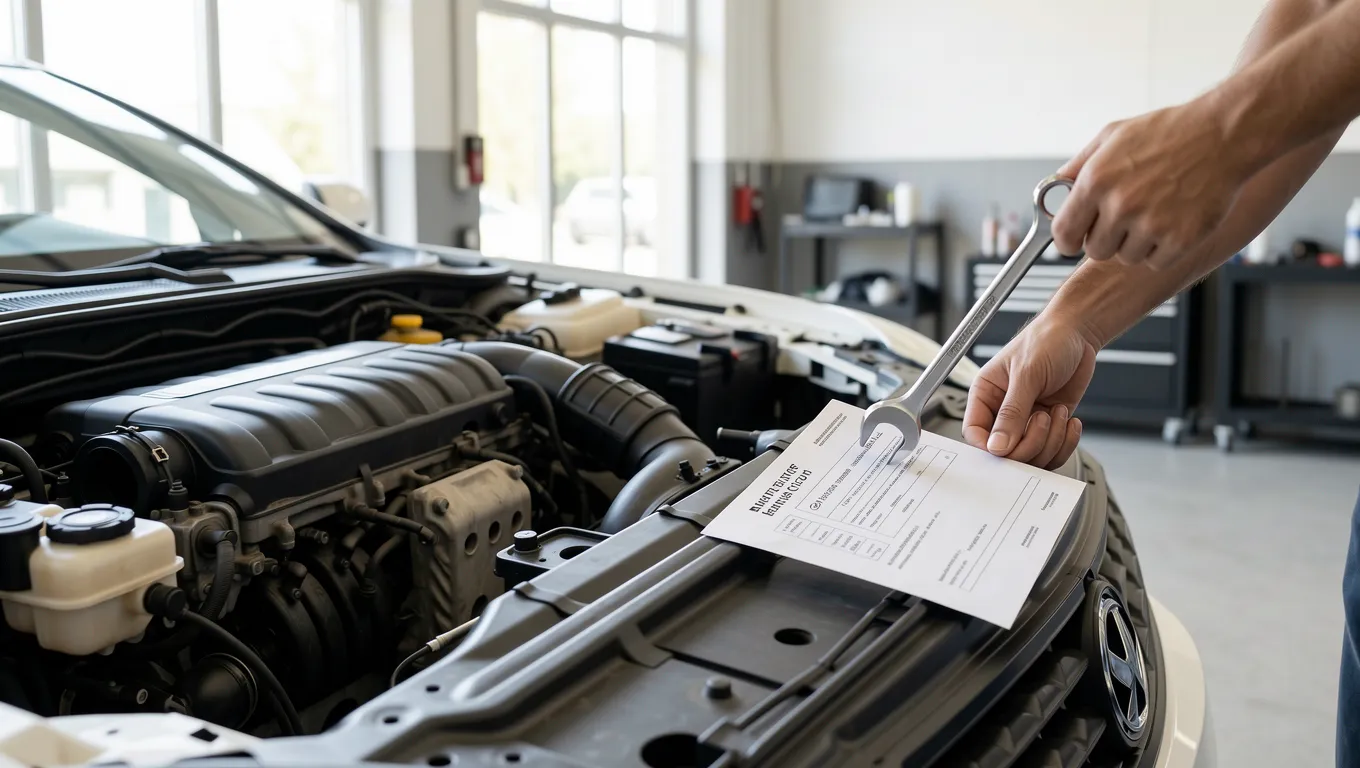
Imagine it is mid-2026, and you are faced with an unexpected $1,500 transmission repair for your car. In early 2024, that same repair might have cost you a manageable $1,100. This discrepancy is not just a feeling of 'things being more expensive'; it is the tangible reality of diminished purchasing power caused by inflation. When an emergency strikes, the money you have set aside in your savings account may no longer cover the actual cost of the service or good required to resolve the crisis. In 2026, navigating these sudden expenses requires a much deeper understanding of how economic shifts impact every dollar in your pocket.
During financial emergencies, the intersection of rising costs and immediate liquidity needs creates a perfect storm for many households. If you are relying on stagnant savings while inflation is climbing, your safety net effectively shrinks even if the numerical balance in your bank account remains the same. For instance, if inflation is running at 4% annually, a $5,000 emergency fund loses approximately $200 of its 'real' value every year just by sitting there. This means that when you finally need to spend it on an urgent medical bill or home repair, the money won't go as far as you had planned.
Understanding this relationship is critical for making informed decisions about borrowing and saving. In this guide, we will explore how inflation changes the math of emergency preparedness. We will look at typical APR ranges—which in 2026 can vary widely from 7.9% to 35.9% depending on your credit profile—and discuss how different types of debt interact with an inflationary environment. Our goal is to help you understand whether borrowing might actually be a strategic move or if it could lead to a cycle of debt that outpaces your ability to recover. This article aims to provide the clarity needed to navigate high-cost environments without compromising long-term stability.
Many people believe that if they have a fixed amount in their savings, they are safe. However, inflation acts as a silent tax on your liquid assets. In 2026, this erosion is more visible than ever as the cost of essential services like healthcare and automotive parts continues to fluctuate. When you face an emergency, you aren't just fighting the sudden expense; you are fighting the fact that the price of that expense has likely drifted upward since you last checked your budget.
Consider a scenario where a family in 2026 needs $3,000 for a roof repair. If they had saved this money specifically in 2024, they might have found themselves short by several hundred dollars due to the rising cost of construction materials and labor. This gap between 'nominal savings' (the number on your screen) and 'real purchasing power' (what that number can actually buy) is where many financial emergencies become catastrophic. The biggest mistake people make is failing to adjust their emergency fund goals for inflation, assuming a static dollar amount will suffice indefinitely.
To combat this erosion, experts often suggest looking at your savings in terms of 'real value' rather than just the nominal sum. If you are saving for an emergency that typically costs $2,000 today, you should aim to save closer to $2,300 or $2,400 to account for potential price hikes by the time the emergency actually occurs. This proactive approach ensures that your 'safety net' doesn't turn into a 'safety trap' where it looks sufficient on paper but fails in practice.
It sounds counterintuitive to suggest borrowing during an inflationary period, but there is a nuanced economic reality at play. When inflation rises, the value of money decreases over time. This means that if you take out a fixed-rate loan today, you are essentially paying back the lender with 'cheaper' dollars in the future. In some specific cases, this can work in your favor, provided the interest rate on the loan is lower than the rate of inflation.
Let us look at a concrete example to illustrate how debt interacts with inflation. Suppose you need $5,000 for an urgent medical procedure and you secure a fixed-rate personal loan at 10% APR over 36 months. Your monthly payment would be approximately $161. If inflation remains high throughout those three years, the 'real' cost of that $161 payment might actually decrease in terms of what it represents relative to your rising wages or other costs. However, this only works if you are not using variable-rate debt.
Comparing strategies is essential here:
When an emergency strikes and prices are volatile, decision fatigue can lead to poor financial choices. To avoid making a mistake that could impact your credit or long-term stability, follow this structured framework to evaluate your next move:
1. Assess the Necessity and Urgency: Is this expense truly essential for health, safety, or livelihood? A broken water heater in 2026 is an emergency; a desire for the latest smartphone is not. If the item can be repaired rather than replaced, calculate the cost of repair versus replacement, accounting for inflation-driven price increases in parts.
2. Calculate the Total Cost of Capital: Do not just look at the monthly payment. Look at the total interest you will pay over the life of a loan. For example, if you borrow $4,000 at 15% APR for 24 months, you will end up paying roughly $670 in interest. Compare this to the cost of using your savings or the potential late fees from unpaid bills.
3. Evaluate Your Repayment Capacity: In an inflationary environment, your monthly surplus (the money left over after all expenses) may shrink as your utility and food bills rise. Never borrow more than you can comfortably repay even if your cost of living increases by another 5%. Always run a 'stress test' on your budget to see how a higher cost of living would affect your ability to meet the loan payments.
This framework helps move you from a state of panic to a state of calculated action, ensuring that your solution to an emergency doesn't become a long-term financial burden.
One of the most dangerous pitfalls during periods of high inflation is the temptation to rely on 'quick fix' financing. As prices for essentials rise, people often feel squeezed, leading them toward predatory lending products that promise immediate cash with little scrutiny. These products can be devastatingly expensive.
For instance, a payday loan might offer you $500 today, but if the terms include an APR of 400%, you could end up paying back several times the original amount in just a few weeks. In an economy where every dollar counts, these high-interest products act as a vacuum on your wealth. The interest rates on these loans are designed to far outpace any inflation rate, meaning they don't just keep pace with rising costs—they accelerate your descent into debt.
Another mistake is the 'fragmented debt' approach. This involves using multiple small-scale financing options (like 'buy now, pay later' services) for various emergency needs. While each individual payment might seem small, they aggregate into a massive monthly obligation that doesn't account for the rising cost of your other essential bills. Always prioritize consolidated, predictable debt over fragmented, high-interest micro-debts. By keeping your obligations centralized and fixed, you maintain better control over your cash flow during uncertain economic times.
To truly master your finances in 2026, you must understand a concept that many casual borrowers overlook: the difference between nominal and real interest rates. This is particularly important when inflation is high or unpredictable.
The 'nominal' interest rate is simply the number on your loan agreement—the APR. If you sign up for a loan at 10% APR, that is your nominal rate. However, the 'real' interest rate is that nominal rate minus the inflation rate. For example, if you have a 10% loan and inflation is running at 6%, your real interest rate is effectively only 4%. In this scenario, the lender is actually losing some value because they are being repaid with money that has less purchasing power than when it was lent.
This nuance is why some economists view debt as a hedge against inflation. If you can lock in a low nominal rate while inflation stays high, the 'real' cost of your debt decreases over time. However, this is an advanced strategy and only works if your income keeps pace with or exceeds inflation. If your wages are stagnant while inflation rises, even a low-interest loan can feel incredibly heavy because the real burden on your lifestyle remains high. Always look at the math through both lenses: what you pay in dollars (nominal) and what you pay in terms of your ability to buy goods (real).
As we move further into 2026, the most effective way to protect yourself is through a combination of proactive saving and strategic borrowing. This means building an emergency fund that isn't just a static number, but a growing target that accounts for inflation. It also means being extremely selective about the types of credit you use when life throws you a curveball.
When you find yourself in need of funds, remember that there are multiple paths to liquidity. You might choose to tap into your savings, which is always the most cost-effective option if the funds are available. If not, you may look at personal loans or other financing options offered by various lenders. It's important to remember that CashNowAdvance is a comparison service, not a direct lender; we act as a guide to help you see what your options might be in the marketplace so you can make an informed choice.
To summarize how to stay resilient: